
Why SSRM Tech™ Works
Built on psycho-semantic research into how subconscious emotional constructs influence perception, decision-making, and stress response.
Research Foundation
SSRM Tech™ did not originate as a consumer wellness application.
The system evolved from structured research environments exploring how subconscious emotional constructs influence perception, behavior, and decision-making under conditions of psychological pressure.
These research efforts focused on measuring subconscious semantic responses and identifying patterns that destabilize emotional regulation in high-stress contexts.
The findings informed the development of structured modulation methods designed to redirect destabilizing response patterns toward more stable cognitive states.
Psycho-Semantic Framework
Psycho-semantics examines how emotionally charged constructs are organized within subconscious structures and how these constructs shape interpretation of experience.
When certain constructs dominate subconscious processing, they can amplify stress responses, distort perception, and trigger reactive decision-making.
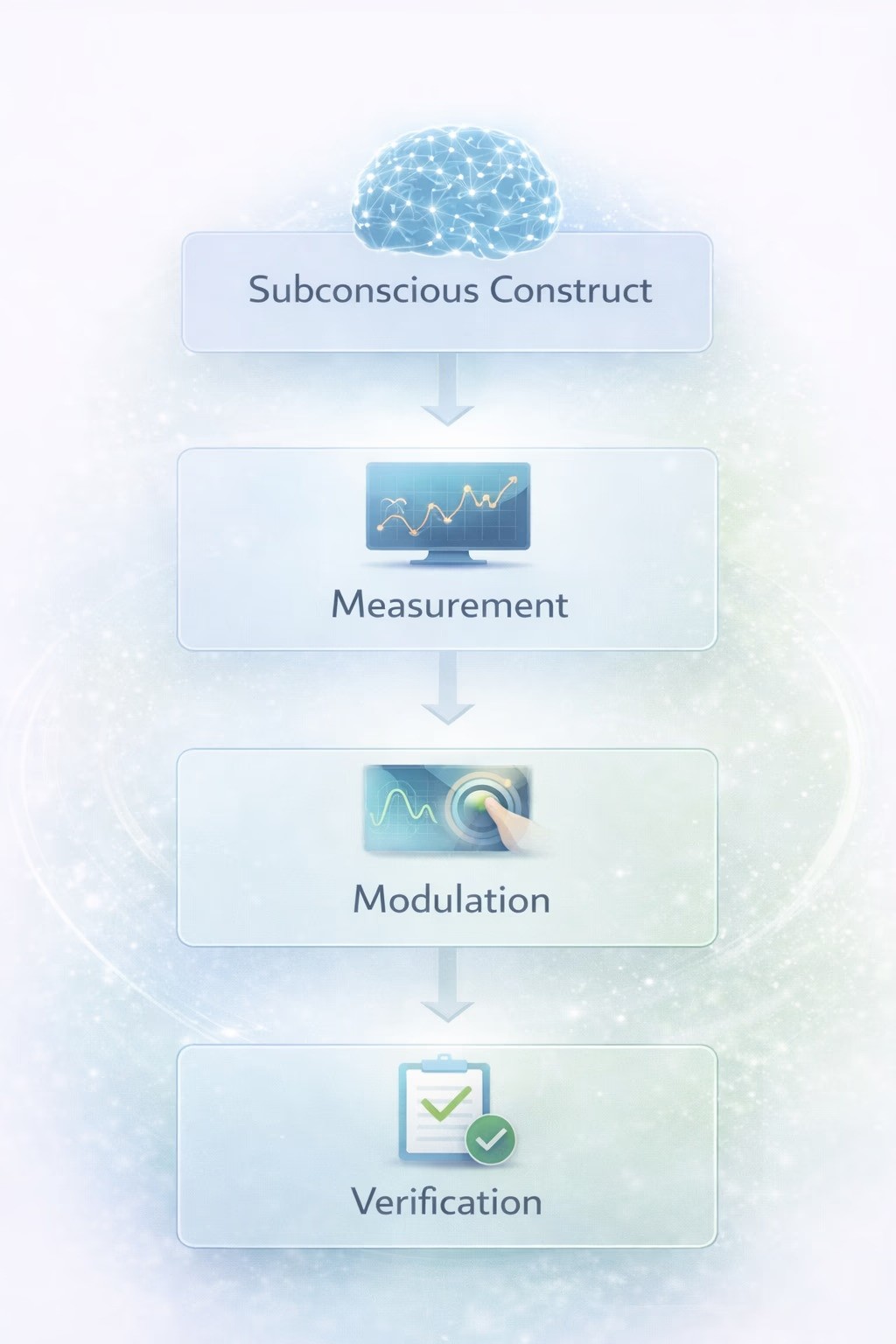
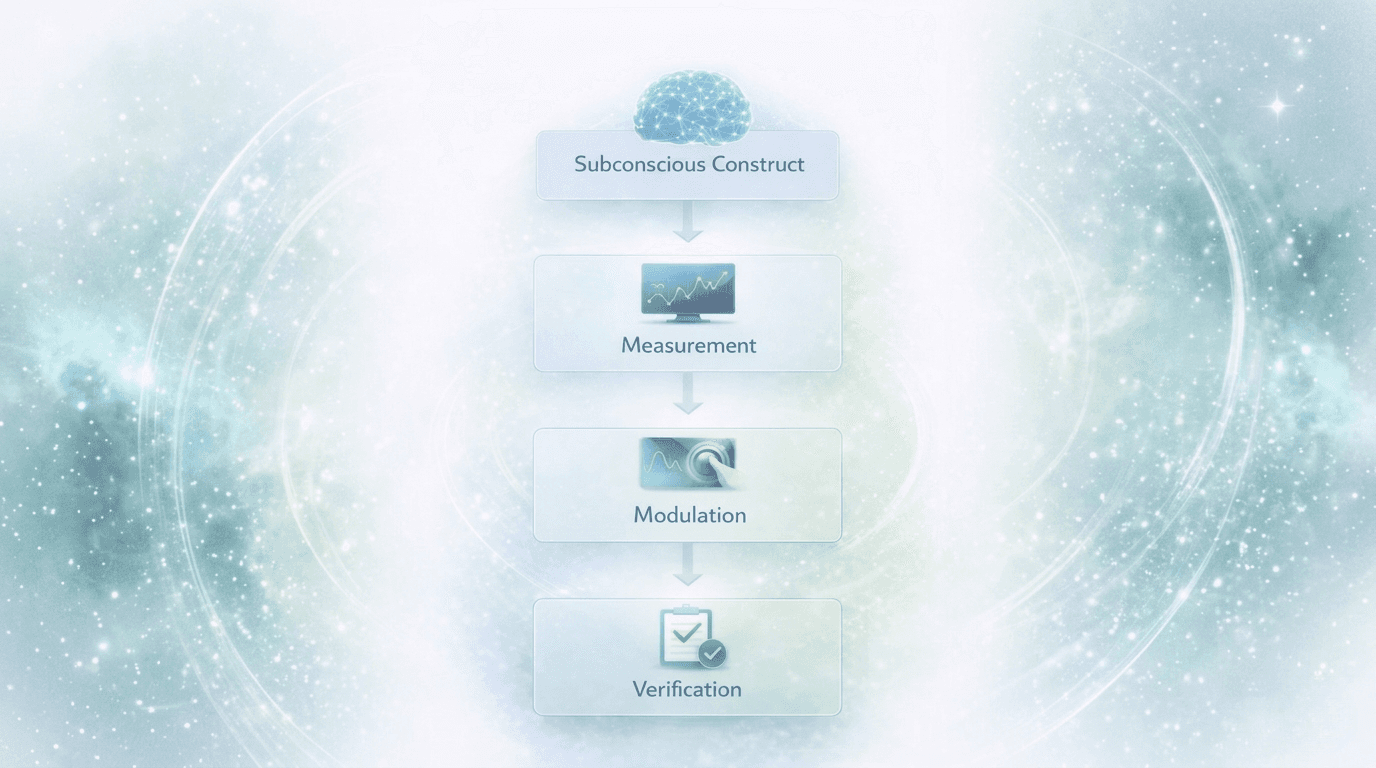
Research within this framework explored:
Measurement of subconscious semantic responses
Identification of destabilizing emotional constructs
Controlled reactivation of semantic patterns
Structured modulation methods
Verification of construct stabilization over time
These insights informed the architecture of SSRM Tech™.
High-Stress Origins
Initial applications occurred in environments characterized by elevated psychological pressure.
In such environments, emotional instability can carry measurable operational consequences, affecting judgment, communication, and decision-making.
Research therefore focused on how subconscious constructs behave under stress and how structured modulation can restore stability before reactive patterns escalate.
This foundation supports application in environments including:
leadership and decision-making contexts
professional high-responsibility roles
periods of acute psychological stress
proactive emotional stabilization
From Research to Scalable System
The research insights were translated into a structured delivery architecture.
SSRM Tech™ now operates through:
a structured 30-session immersive protocol designed to modulate destabilizing constructs
a reinforcement application supporting continuity between sessions
anonymous token-based system access
Together these components allow the research methodology to operate at scale while preserving user privacy.
Measurement Philosophy
SSRM Tech™ was designed with privacy as a foundational principle.
The system does not collect personal identity data.
No names, emails, or identity-linked records are required to access the platform.
Anonymous system-level data may be retained for purposes including:
platform improvement
stability verification
cohort-level analysis of system effectiveness
At no point does the system link measurement data to personal identity.
Research Origins
The methodology informing SSRM Tech™ emerged from professional research environments focused on psycho-semantic response measurement and structured subconscious modulation.
The work explored methods for identifying dominant emotional constructs, activating controlled semantic stimuli, and measuring the resulting shifts in cognitive stability.
These foundational principles informed the architecture of the SSRM Tech™ system.
WHAT THIS IS
Most systems rely on self-report.
This does not.
SSRM is deployed in structured cohorts to observe how behavior changes under real conditions —
directly, not through interpretation.
The system evaluates:
initiation
continuity
pressure stability
recovery
All measurements are derived from interaction patterns, not subjective input.
HOW COHORTS WORK
A cohort is a defined group using SSRM over time under controlled conditions.
Each cohort produces:
baseline measurement
ongoing behavioral signals
post-intervention comparison
Participants access the system anonymously through tokens.
No personal identity is collected.
Only aggregated behavioral patterns are analyzed.
All measurements are derived from interaction patterns, not subjective input.
WHY COHORTS ARE USED
Cohorts are used when behavior needs to be observed, compared, and understood at scale.
This includes:
structured environments (education, workforce)
defined populations under similar conditions
research-oriented deployments
Cohorts allow direct comparison across time and groups — without relying on subjective reporting.
100
Participants
Structured Cohort
500
Participants
Scaled Cohort Deployment
1000
Participants
Full Cohort Deployment
WHAT IS MEASURED
Behavioral change is evaluated through:
response timing patterns
consistency under repetition
deviation under pressure
recovery after disruption
Measurements are:
non-clinical
non-diagnostic
non-identifying
DATA STRUCTURE
Each cohort produces:
baseline dataset
intermediate dataset(s)
post-intervention dataset
Comparisons are made across:
time
groups
behavioral domains
No personal identity is stored.
SYSTEM POSITION
This is not:
a wellness program
a diagnostic tool
a self-report platform
This is a system for:
behavioral observation
controlled exposure
measurable response change